When it comes to writing, sometimes the best approach is a series of small, doable steps: quick prompts, engaging visuals, and simple frameworks that help your kids get words on paper without the overwhelm. Use these tools to supplement your existing curriculum and turn writing assignments into a succession of small, satisfying wins.
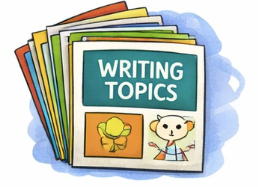
Instant Ideas for When the Brain Says,
“I Don’t Know What to Write.”
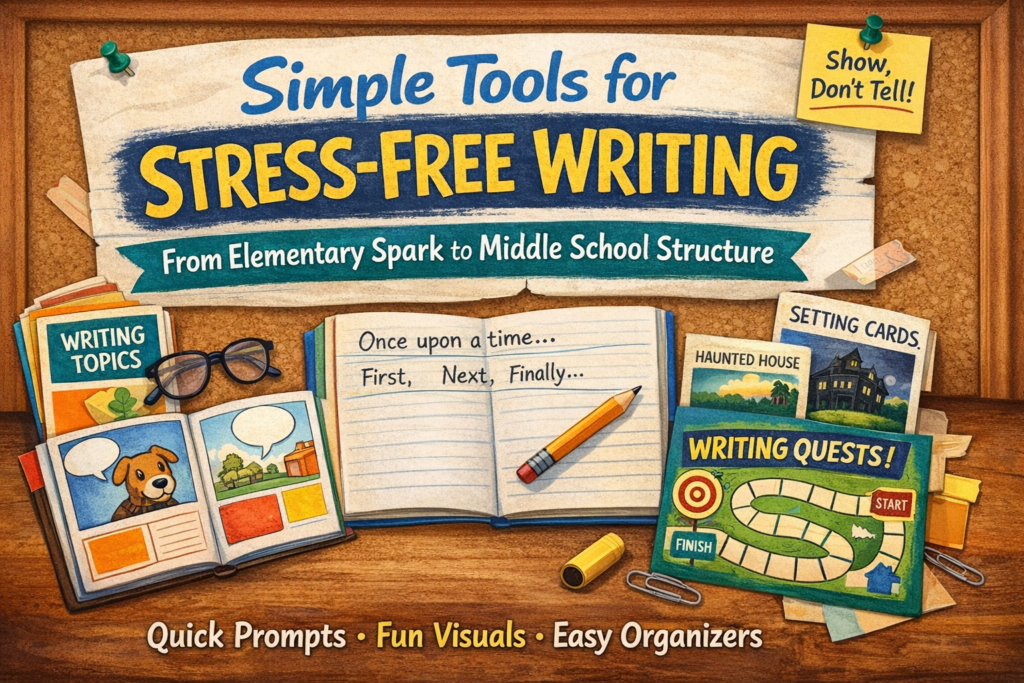
This deck of 100 full-sheet cards covers everything from the imaginative (superheroes) to the everyday (cleaning and shopping). Each card features a large, clear illustration and the topic word. For your 2nd-4th graders, this provides a concrete starting point. For your older kids, these can be “seeds” for more complex expository or persuasive essays (e.g., “The history of robots”, or “Why bicycles are the best form of transportation”).
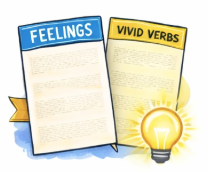
A “Make Your Writing Less Boring” Cheat Sheet
A ready-to-use descriptive language word bank that helps kids move beyond bland writing. This collection of vivid verbs and “show, don’t tell” emotion phrases gives young writers concrete ways to describe feelings, actions, and dialogue. Works for narrative writing and story revisions, putting just the right words at their fingertips.
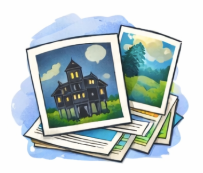
Visual Fuel for Stronger Paragraphs
If your kid needs help trying to conjure a world out of thin air, flip to a page — like the spooky haunted house, or the dusty wild-west saloon — and immediately have a backdrop. Each setting comes with a list of key words. So if your kid is stuck on how to describe that snowy mountain, the card prompts them with words like bitter, remote, or breathtaking. It’s basically a “cheat sheet” for vivid vocabulary.
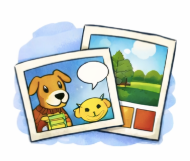
Dialogue, Voice, and Perspective (Disguised as Fun)
This interactive “conversation journal” uses a topic kids are experts on: their pets. Or, if you’re currently a pet-free household, their dream pets. The layout uses a comic-strip style with speech bubbles and fill-in-the-blanks. As kids “interview” their animals, they’re practicing character voice, perspective, and dialogue.
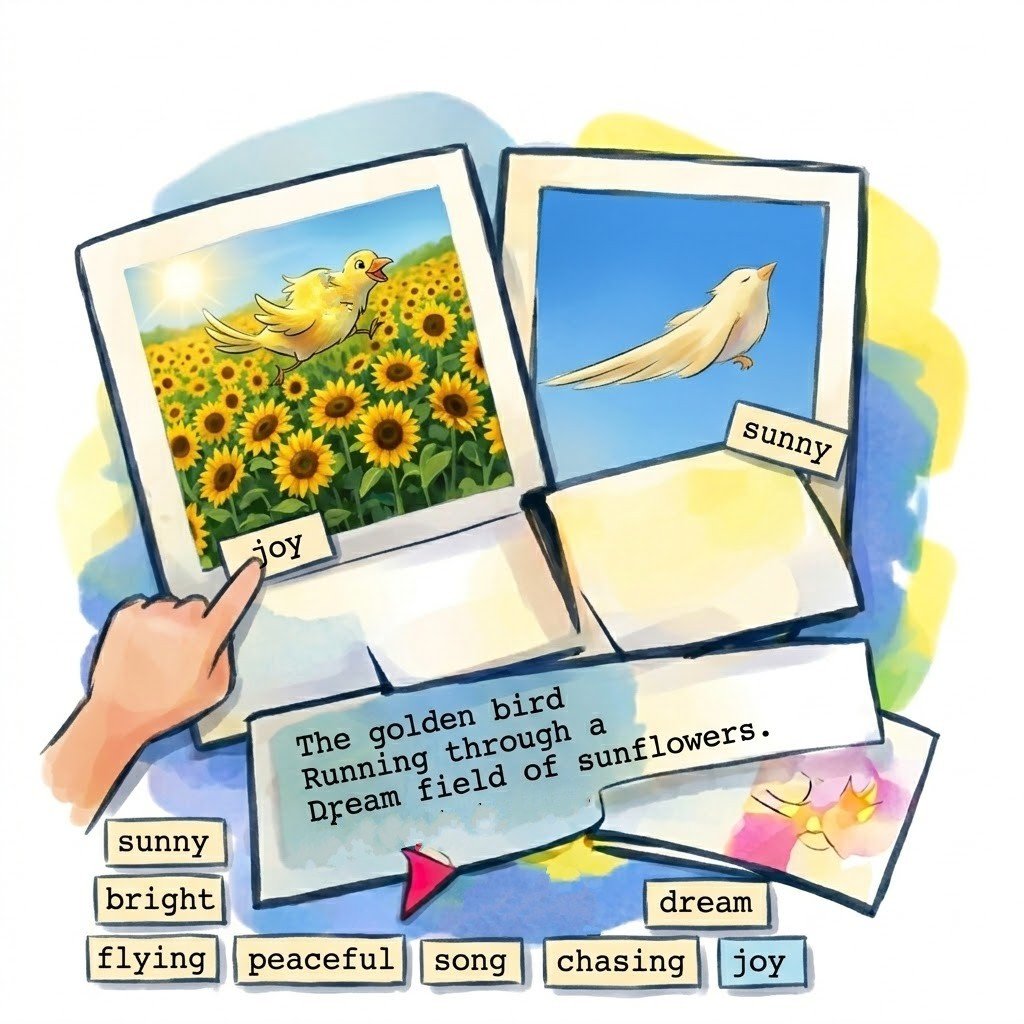
Start with the Image. Let the Words Follow.
This visual literacy tool uses high-quality photos to inspire everything from a single caption to narratives and poems. Kids drag and drop keywords, or type their own directly onto a photo to create a “Pic-Lit.” There’s an “Easier” track (matching words to objects or writing simple captions) and a “Harder” track (focusing on complex sentences, metaphors, and dialogue). There are also lesson plans for nouns, adjectives, verbs, and adverbs.
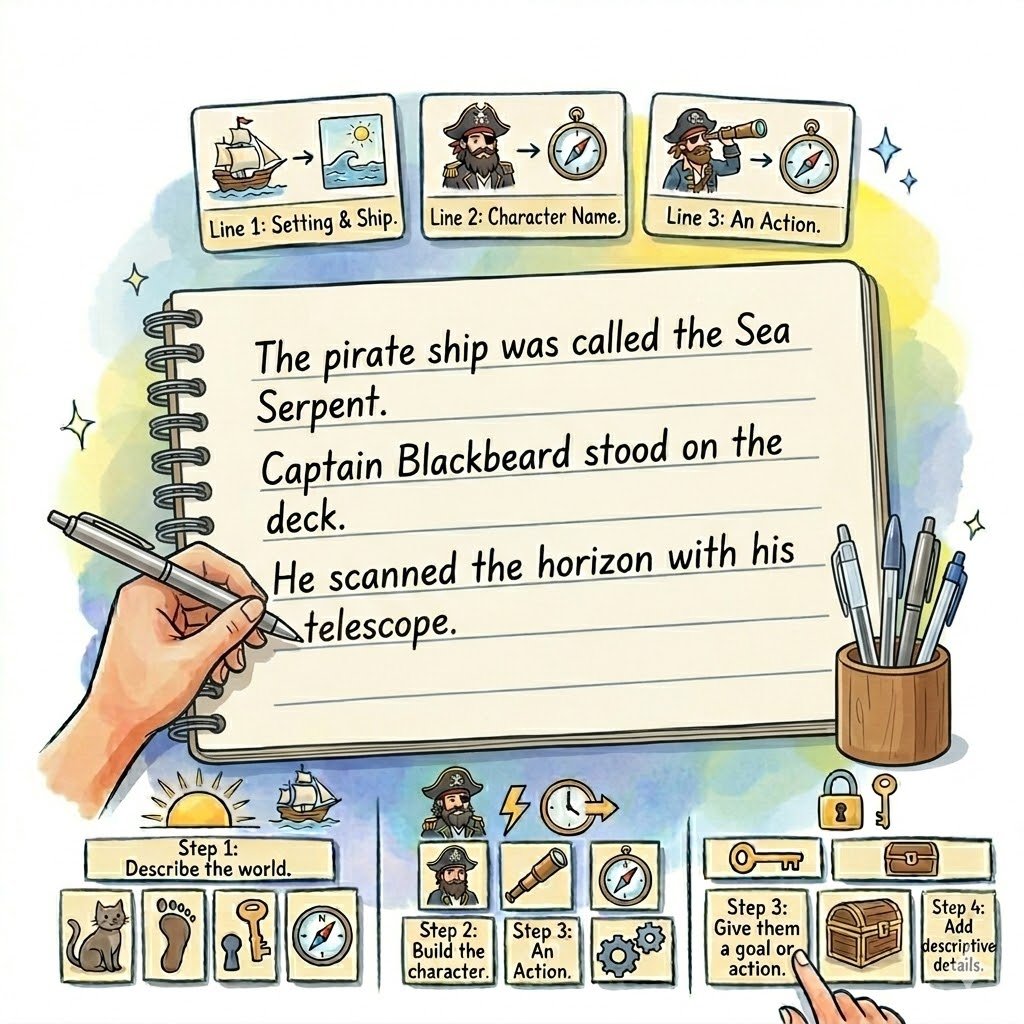
Step-By-Step Story-Building
This activity is designed to help kids build a short story one sentence at a time. A transition word bank (categorized by beginning, middle, and end) gives kids the “right words” at their fingertips. The exercise can be used for a fictional story or a real-life personal narrative.
Cross-Discipline Idea: Use the challenge to write a story about a historical figure you’re studying. Pair this challenge with one of the Story Setting Description Cards.

No-Prep Discussion and Writing Starters
The New York Times Learning Network posts weekly collections of picture prompts designed to get kids writing. Because it’s visual, kids of all skill levels can participate. While the younger one writes a descriptive paragraph, the older one can dive into an argumentative piece or a creative narrative based on the same image. Easy to pull up on a tablet for a “Morning Basket” activity.
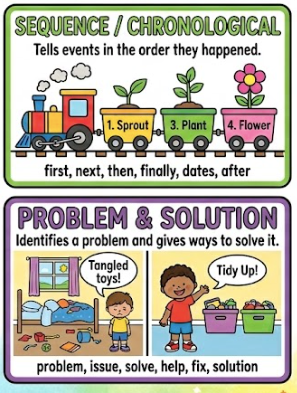
“I Know Exactly Where This Goes.”
These clear templates act as a roadmap for plugging ideas into ready-made frameworks. You can start with a simple list, then move through the five main text organizing structures: descriptive, sequence, compare & contrast, cause-effect, and problem-solution. These same organizational structures mirror those found in reading materials across different subjects, so you’re reading comprehension as well.
Show your kid that these organizers are not just for essay assignments. They can be tools for organizing what they already know. For instance, if your child is describing an issue in a video game, use a Problem-Solution template, or if explaining how to care for the new puppy, use a Sequence organizer.
Pair the organizers with the task cards. Draw a card, then choose (or assign) a structure like sequence, compare/contrast, etc. The task card gives them the what to write about, and the graphic organizer gives them the how creating a clear, manageable starting point.
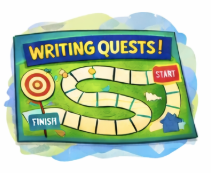
A Visual Map of Achievable Levels
This is an idea for turning the daunting task of writing a paper into a series of small, achievable levels for your kid to “win.” From “Introduction” and “Thesis Creation” all the way to “Finish & Submit”, you can trace your progress and see exactly where you’re at. The gameboard includes pre-loaded writing resources, but because this is an editable Google Doc, you can easily “make a copy” and customize it to suit your specific needs.
Sometimes writing progress starts with a single sentence, a quick prompt, or a simple framework that builds step by step. Hopefully, these resources will help make writing in your homeschool feel achievable and easier to implement.
Browse the Homeschool Writing Toolkit for simple supplies that support these prompts and organizers. (#CommissionsEarned)