🌿 Some of our best science lessons didn’t happen sitting around the kitchen table or in the living room. They happened at zoos, aquariums, nature centers, botanical gardens, parks, and even in our own backyard. Exploring the natural world together has led to some of our favorite homeschool memories.
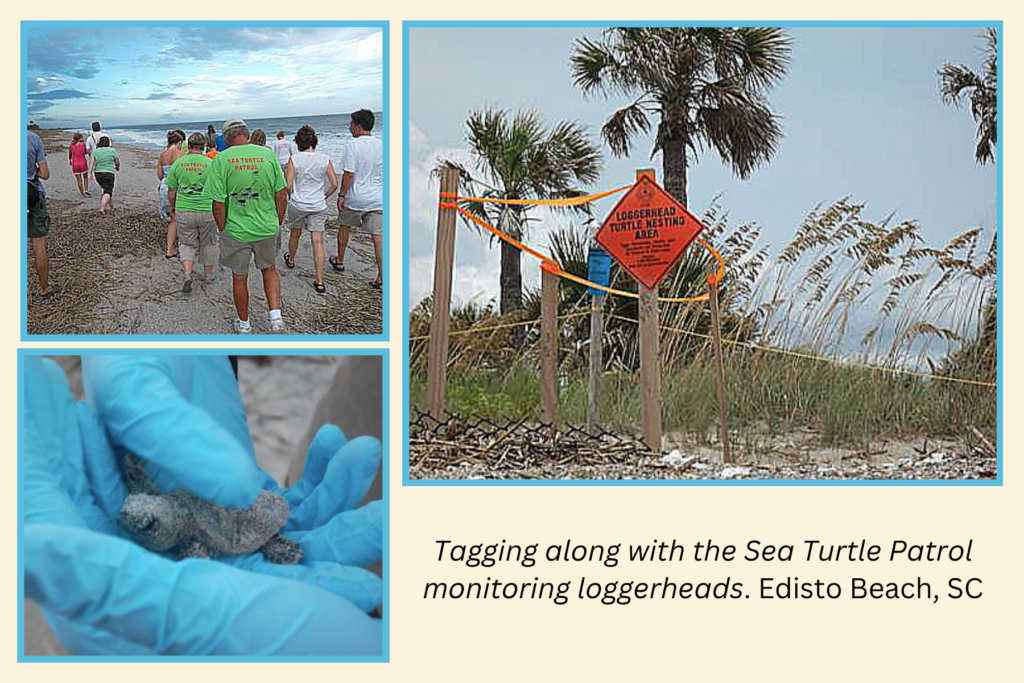
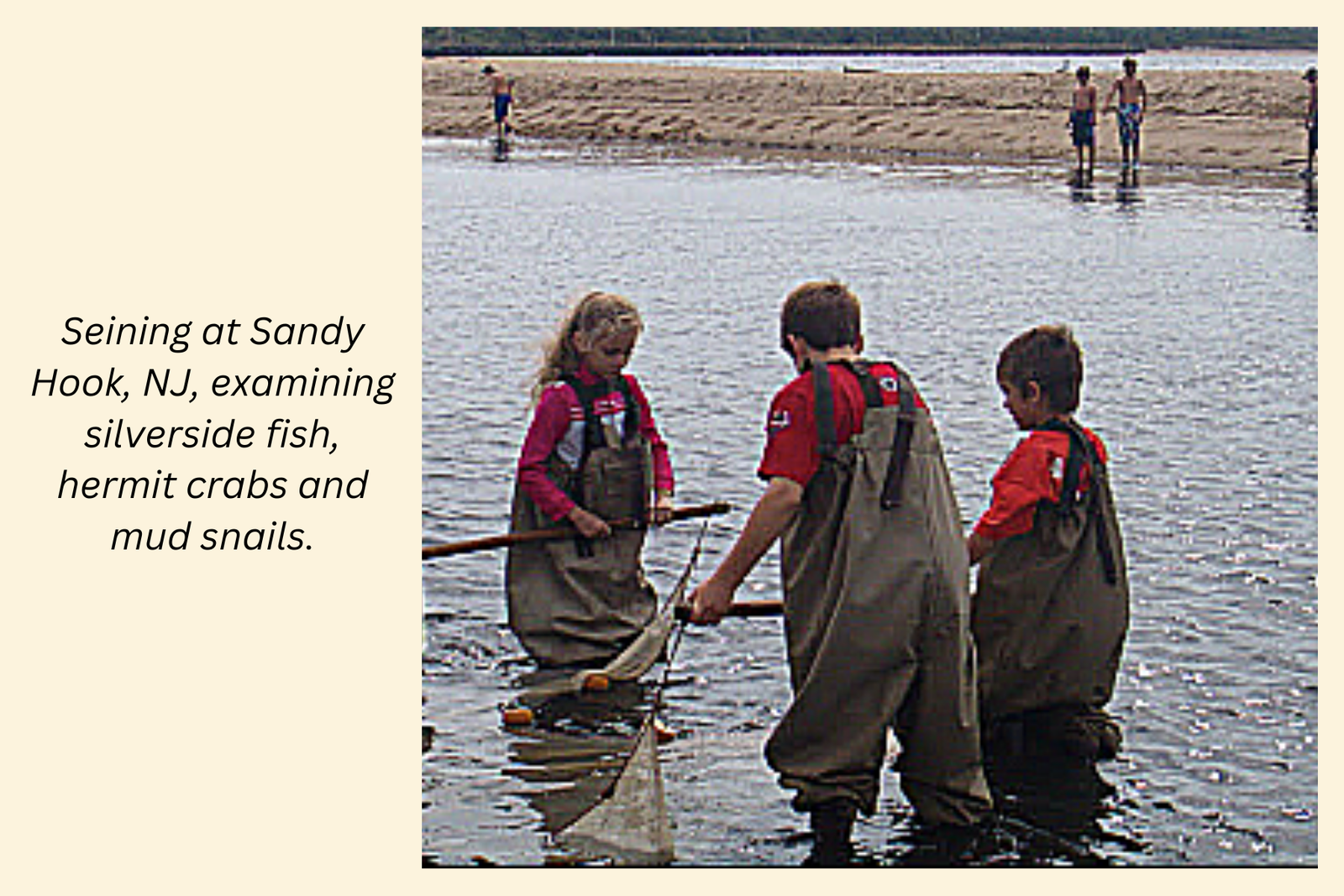
When experiences are paired with engaging books, they become even more meaningful. Reading about plants, animals, fungi, and other living things helps kids understand what they see, make new connections, and build lasting science background knowledge.
Check out the books and activities in this guide and have fun exploring living things together.
💡 What Kids Will Discover
As kids explore living things, they’ll discover:
- the characteristics that all living things share
- how plants, animals, fungi, and microorganisms meet their basic needs
- how living things grow, reproduce, and respond to their environment
- how scientists classify living things into groups
- how adaptations help living things survive in different environments
- how all living things have life cycles
- how living things depend on one another and their environment
📚 Free Books
| Grades 3 – 5 | Grades 5 – 7 |
|---|---|
| Nonfiction | Nonfiction |
| Microbes: Friend or Foe? Bacteria, viruses, fungi, protozoa | Living Organisms |
| Plants and How They Grow With glossary and comprehension questions. | Plant Processes Photosynthesis, transpiration, tropism |
| Weird Plants Meat-eating, tropical, parasitic, and others | Botanist Learn what these plant scientists do day to day, and some tools of the trade |
| Grouping Living Things Animal classification; plant and other kingdoms | Biological Adaptations Behavior and characteristics that help animals survive |
| Physical Characteristics Animal adaptations | Weird Animals Adaptations resulting in unique abilities |
| Survival Instincts: Reptiles; Mammals; Insects | Essential Invertebrates Facts about invertebrates around the world |
| Fiction | Fiction |
| The Magic School Bus Plants Seeds Covers the life cycle of plants, including pollination, seed dispersal, and germination | A Sound of Thunder A story showing how all living things are connected, and how changing just one organism can disrupt an entire ecosystem. |
📚 Additional Books
(As an Amazon Associate I earn from qualifying purchases.)
| Grades 3 – 5 | Grades 5 – 7 |
|---|---|
| Nonfiction | Nonfiction |
| Unseen Worlds 10 fold-out spreads reveal intricately detailed illustrations of microscopic creatures and habitats | Micro Life: Miracles of the Miniature World Revealed Organized by how organisms function: movement, reproduction, energy/feeding, sensing, and defense |
| Pretty Tricky: The Sneaky Ways Plants Survive Explores survival strategies like camouflage, defense mechanisms, and pollination tricks | Botanicum Organized as a virtual museum with cross-sections showing how plants work |
| Animal Sidekicks: Amazing Stories of Symbiosis in Animals and Plants Features unusual symbiotic relationships (fish cleaning shark teeth; crabs wearing sea urchins) | Animalium Resembles natural history museum displays, exploring animal biodiversity and classification |
| Fire Escape How Animals and Plants Survive Wildfires Explores how animals detect, respond to, and adapt to wildfires | Ben Rothery’s Deadly and Dangerous Animals Covers adaptations, hunting strategies, and survival mechanisms (vise-like bite, lightning attacks, toxins) |
| Who Was Jacques Cousteau? Covers Cousteau’s groundbreaking discoveries of underwater ecosystems, ocean creatures, and conservation principles | The Great White Shark Scientist Actual investigation into great white shark breeding grounds off Cape Cod |
| Eyewitness Explorer: Nature Ranger 30 activities teach children to observe animals, plants, and their habitats | Ultimate Explorer Field Guide: Insects Encourages observation skills and active learning during outdoor exploration |
| Fiction | Fiction |
| Charlotte’s Web Classic featuring the life cycle of a spider | The Good Dog Explores animal behavior, instinct versus domestication, and the basic needs of living organisms |
| A Dolphin Named Bob Illustrates concepts such as mammals vs. fish; dolphin physical characteristics built for an aquatic environment; mammal life cycles | Charlie’s Raven Highlights animal behavior and adaptations; impact of natural and human-made threats on living organisms |
📚 Keep Browsing
Other places to find lists of fiction books by topic:
Reinforce what you’re studying while encouraging your kids to follow their interests. Check libraries for:
- Nature reference books with photographs, diagrams, and facts about plants, animals, fungi, and other living things.
- Nonfiction books about a specific group of living things (such as mammals, birds, reptiles, amphibians, fish, insects, fungi, or plants)
- Books about how living things grow and survive: discover how organisms meet their basic needs, reproduce, and respond to their environment.
- Biographies or spotlights on scientists who study living things (such as biologists, botanists, zoologists, mycologists, or microbiologists)
- Field guides to local trees, wildflowers, birds, insects, fungi, or other wildlife.
🌱 Connect What You Read
Choose one or two simple activities to help your kids make connections between what they read and the world around them, using little more than curiosity, a notebook, and a pencil.
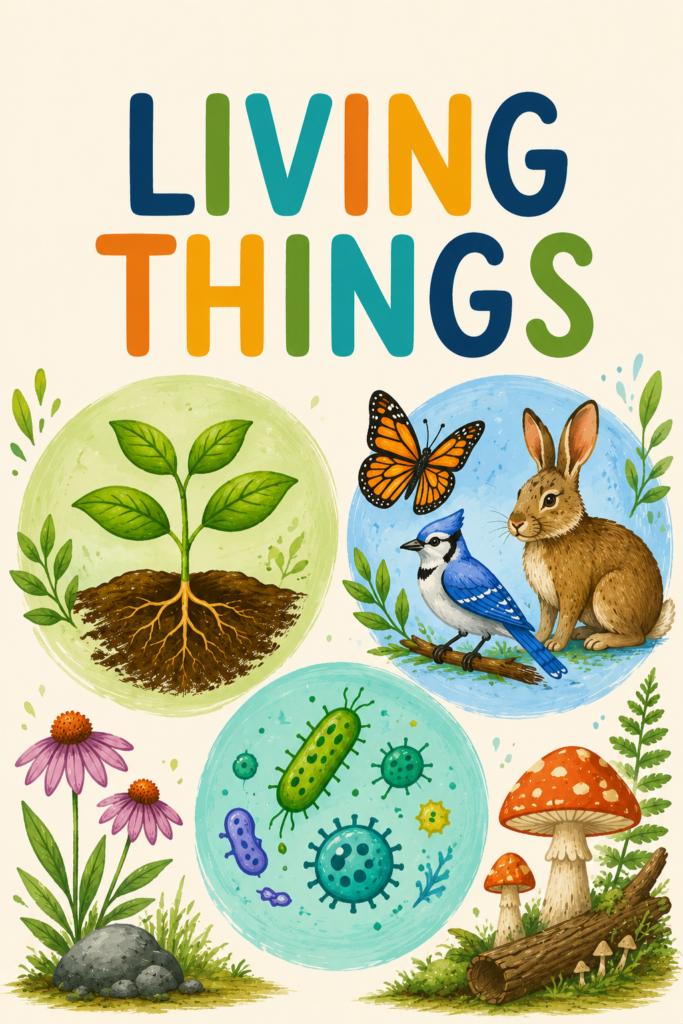
🌱 Living or Not?: Choose five to ten things you see around your home, backyard, or a park. Record each one in a notebook and decide whether it is living, once living, or never living. Explain what clues helped you decide. (Examples: tree, mushroom, bird, feather, rock, stick, flower, squirrel, log). This gets kids applying the characteristics of living things instead of memorizing a definition.
🌼 Compare Two Living Things: Choose any two living things you observed or read about, (a bird and a tree, a mushroom and a butterfly, a flower and a squirrel). Create a simple comparison in your notebook. Ask questions like:
- What do they need to survive?
- How do they grow or reproduce?
- How are they alike? How are they different?
This helps kids recognize the shared characteristics of living things and the diversity of life.
🌱 Dissect A Flower: Take a detailed look at the parts of flowers
🔍 Candy Camouflage: Illustrate animal camouflage with candy
👀 Backyard Biodiversity: Investigate microhabitats in your backyard or local park.
🌎 Keep Exploring
Continue building your life science background knowledge with these free resources:
Core Knowledge has a free grade 4 unit on Structures & Functions of Living Things, and a free grade 7 unit on photosynthesis. Both units include lessons, student reader, teacher guide, and online resources.
Next up: Ecosystem Books for Kids