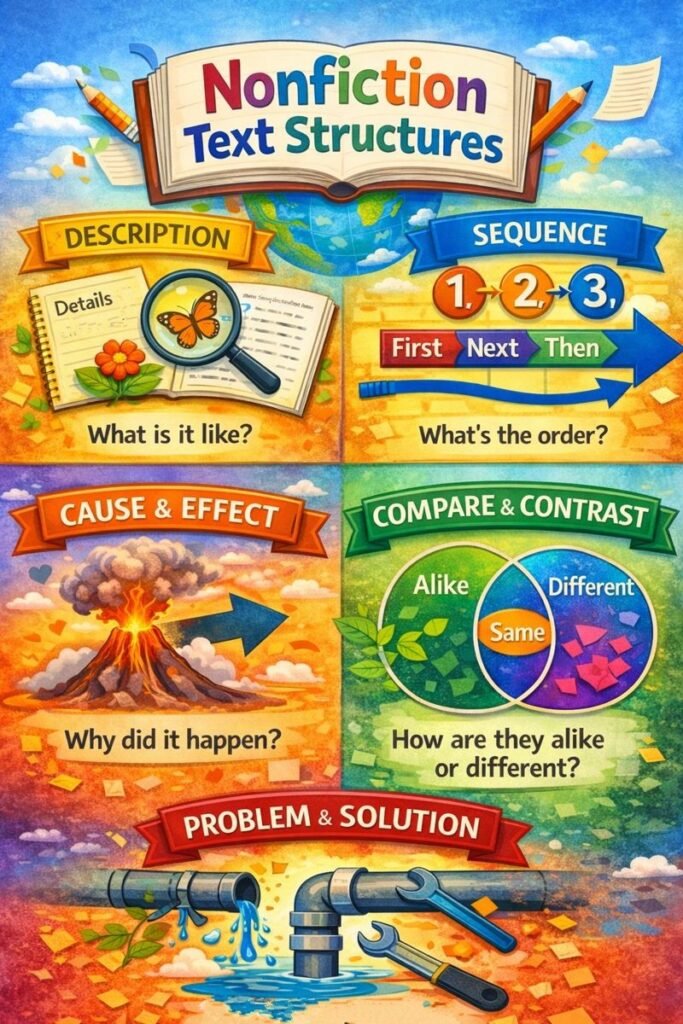
Just as there are ways to examine fiction by studying story elements like plot, characters, figurative language, theme, etc. there are also strategies to help readers make sense of nonfiction. An effective way is to recognize text structures, the patterns writers use to organize information and explain ideas. These structures show up in lots of places: science articles, history passages, informational books, and written tests. When kids recognize how information is organized, they remember it better, summarize more accurately, and can get a better understanding of what purpose the information serves.
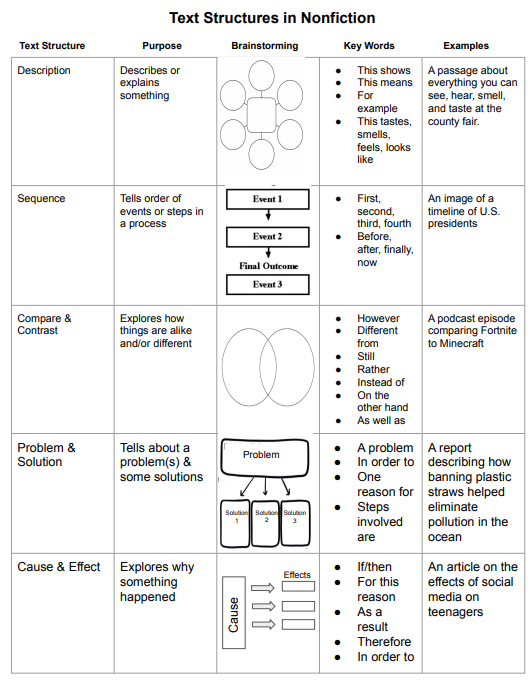
Nonfiction writers use the same common organizational patterns to present information, (often using more than one simultaneously). Once kids learn to recognize these patterns, reading informational text can seem less daunting. Download the Chart
Learning about text structures can work right along with the reading you’re already doing. You can focus on one structure at a time and revisit it across different subjects. Reading about animals or weather? Try Description. Working through science processes or historical events? Sequence is a natural fit.
The goal is to begin noticing how information is organized and why it’s presented that way. This page is a starting point for some free, ready-to-use resources for each text structure. Below, you will find short video and slideshow overviews, interactive activities and worksheets for practice, and leveled readers that let kids apply what they’ve learned in real texts. Use what fits, skip what doesn’t, and come back as needed.
As the individual text structure pages are being built, you can get started with the Description Text Structure post, then view a collection of free overview resources and activities that cover multiple text structures together. Click here to jump down to those videos, slideshows, and practice activities.
Five Common Text Structures

Description: Reading to learn key features and details.
This structure explains a topic by describing its characteristics, traits, or examples. It’s common in science and geography texts, where the goal is to help readers understand what something is like.
Explore free Description text structure resources and practice
Sequence: Reading to follow steps or events in order.
Sequence texts organize information by time or steps. Readers need to pay attention to order, especially when one event or step depends on the one before it.
Compare & Contrast: Reading to notice similarities and differences.
This structure helps readers examine how two or more things are alike and different. It’s often supported by charts or diagrams and shows up frequently across content areas.
Explore Compare & Contrast text structure resources and practice.
Problem & Solution: Reading to identify an issue and how it was addressed.
Problem-and-solution texts present a challenge and one or more responses to it. This structure is common in social studies, science, and real-world issue-based reading.
Explore free Problem and Solution text structure resources and practice.

Cause & Effect: Reading to understand why something happened and what resulted.
This structure explains relationships between events or ideas. Readers focus on causes, effects, and how one leads to another, sometimes in a simple chain, sometimes in more complex ways.
Explore free Cause & Effect text structure resources and practice.
Multiple Text Structures: Overviews
Structures of Informational Texts: Khan Academy Video
Common Text Structures: Video tutorial
Slideshows: One for each text structure; includes example paragraphs
Slideshow: Explains text structures using soccer as the topic.
Teaching Text Structure: Explanatory article with free text structure templates
Multiple Text Structures: Worksheets & Activities
Practice with Text Structures: 11 short science and social studies articles, each with a text structure graphic organizer
Text Structure Graphic Organizers: Includes signal words (common phrases used that indicate particular text structures); and question prompts to help organize thinking and summarize information
More Graphic Organizers: In addition to the 5 primary text structures, this document includes a couple of graphic organizers for the question & answer format
Text Structure Sort: This is a set of printable cards. Read short paragraphs on text structure cards. Identify the text structure used. Place the paragraph cards under the correct text structure header cards.
Text Structure Flip Book: Instructions and blank templates
Free Text Structure Review Games: Printable from TPT
(As an Amazon Associate I earn from qualifying purchases.)
Daily Reading Comprehension
Evan-Moor Daily Reading Comprehension (Grades 1–8) offers steady, low-prep practice with many of the same text structures and comprehension skills covered on this page. The series also includes related skills like identifying main ideas, understanding an author’s purpose, and making sense of fiction texts.
Each book includes short daily passages and visual supports that help learners think about how information is organized as they read. The lessons are cumulative, so this series works well as a simple way to reinforce text structure awareness over time, especially for families wanting structured practice without having to assemble multiple resources.