
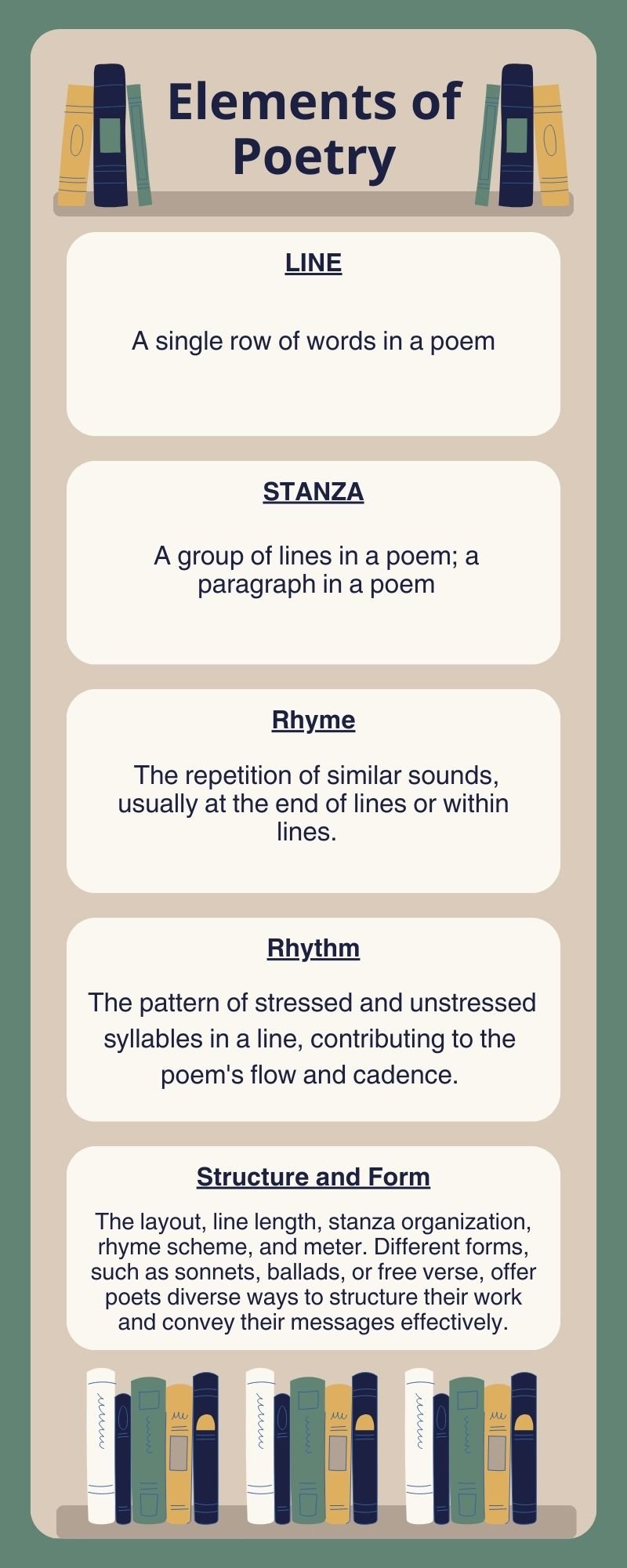
This section focuses on the rhythms and patterns writers build into their words so readers can appreciate not just what a text says, but how it sounds. The elements of poetry and poetic devices like alliteration, assonance, consonance, rhyme, rhythm, and onomatopoeia all help to make the language in poetry memorable.
Overviews and Tutorials
Poetry Tutorial: Explains structure, sound devices, figurative language; with practice exercises.
Analyzing Figurative Language Slideshow
Understanding Figurative Language in Poetry (Wordsworth’s “I Wandered Lonely as a Cloud”; Shakespeare’s “Shall I compare thee to a summer’s day?”)
10 Poetic Devices: with an example poem for each device
Practice Activities
Analyzing a Poem: A simple chart with guiding questions for analyzing any poem.
Smile, It’s Poetry: A worksheet using the acronym S.M.I.L.E. (Structure, Meaning, Imagery, Language, Effect) for analyzing any poem.
Poetry Detective: Worksheet for analysis
Poetry Analysis Guide: Reviews poetic elements and figurative language; guiding questions for analyzing poems
Poems
Poetry Document: Provides four sets of poems, including works by Edgar Allan Poe, Robert Frost, Langston Hughes, and E.E. Cummings, to teach various poetic elements.
“The Tyger”: Poem and worksheets
“Mother to Son” (with review questions)
“You’re A Mean One, Mr. Grinch“: Lyrics with comprehension questions
Poetry Happens: This post provides additional free poetry units, tutorials, and exercises
Explore More: Visit other posts in this series.