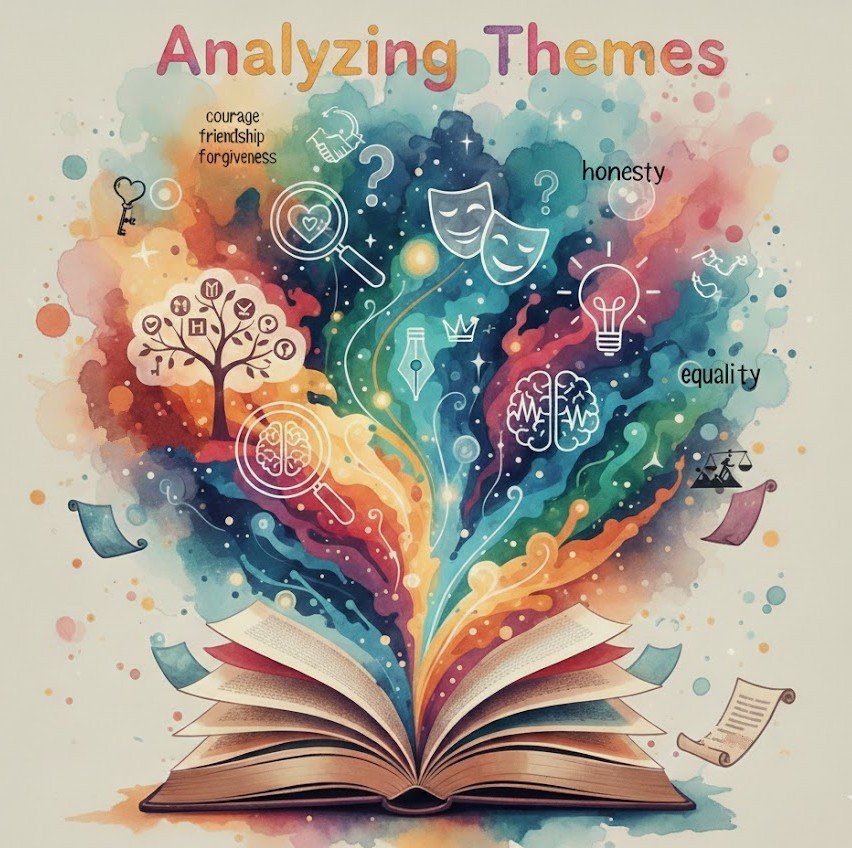
Theme is the message, insights, or truths an author explores throughout a story. Theme encourages readers to contemplate life by examining thoughts, emotions, and behaviors. Teaching kids to determine the theme is a key component of literary analysis because it goes beyond retelling and listing of events: (“First this happened; then that happened”), to thinking about deeper questions: (What does this story suggest about people, choices, the world?) The shift from summary to meaning is where real analysis comes in.
This post includes free resources to help kids
- identify theme using strategies to uncover an author’s message
- and write clear theme statements
These analysis tools can help kids move from “what happened” to “why it matters.”
Overviews and Tutorials
Determining Theme: Khan Academy lesson
Identifying Theme: Tutorial with practice exercises
Universal and Recurring Themes: Tutorial with practice exercises
Theme Video: With game and worksheet
Practice Activities
Uncovering Theme: Summarizing a story vs. finding its theme
Understanding Themes in Poetry
Analyzing Universal Themes: In “The Gift of the Magi”
Exploring Themes: in Pride and Prejudice (4 parts)
The Magic of Allusions and Theme
How To Write a Theme Statement: Identify a concept; make an assertion about the human condition.
How To Write a Theme Statement 2: This one instructs on how to identify the theme, tells what makes a good theme statement, and provides a lit analysis example.
Universal Themes in Poetry: Read some poems; write some theme statements.
Short Stories
“Marigolds:” Theme and setting
“The Interlopers” Theme and setting

Explore More: Check out Literary Analysis for Any Book with additional free resources for studying elements of literature.