🧠 There are all kinds of free, high-quality visual resources, like videos and interactives, for studying the human body. Whenever possible, we also loved exploring interactive human body exhibits and, of course, doing fun activities.
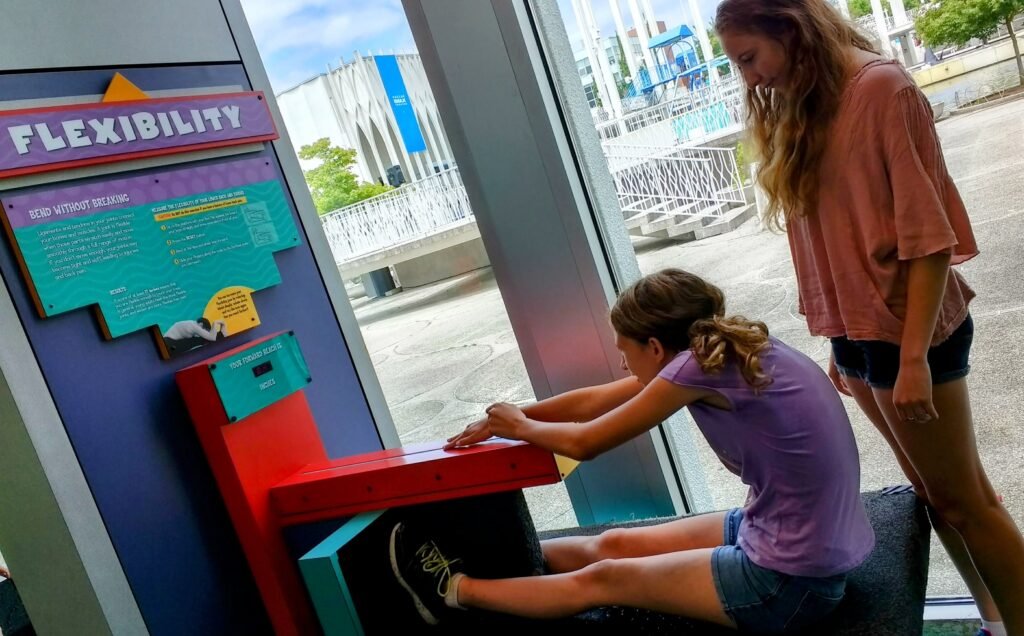
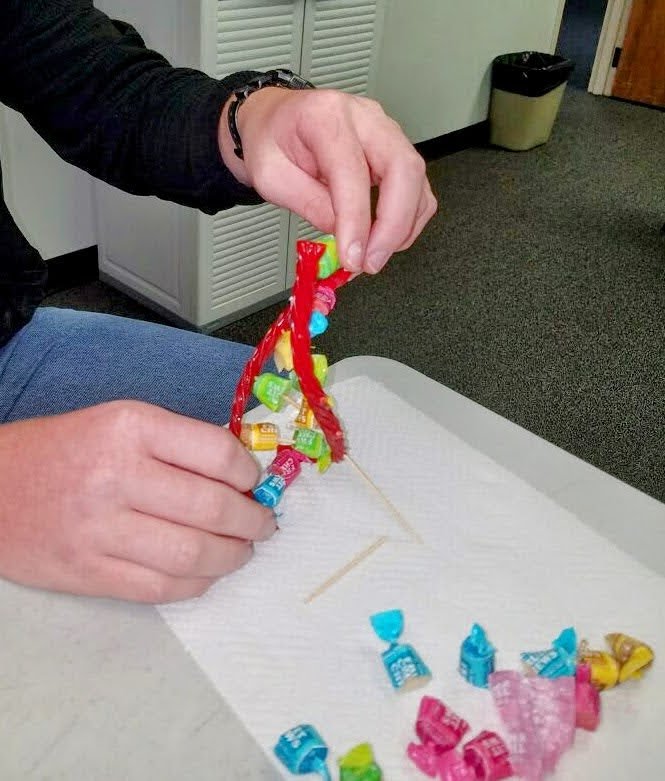
In this guide, you’ll find free books and recommended reads, free activities, and simple ways to connect what kids are learning to their own bodies and everyday lives. Choose the ideas that work best for your family, and enjoy discovering how the human body works together.
💡 What Kids Will Discover
As kids explore the human body, they’ll discover:
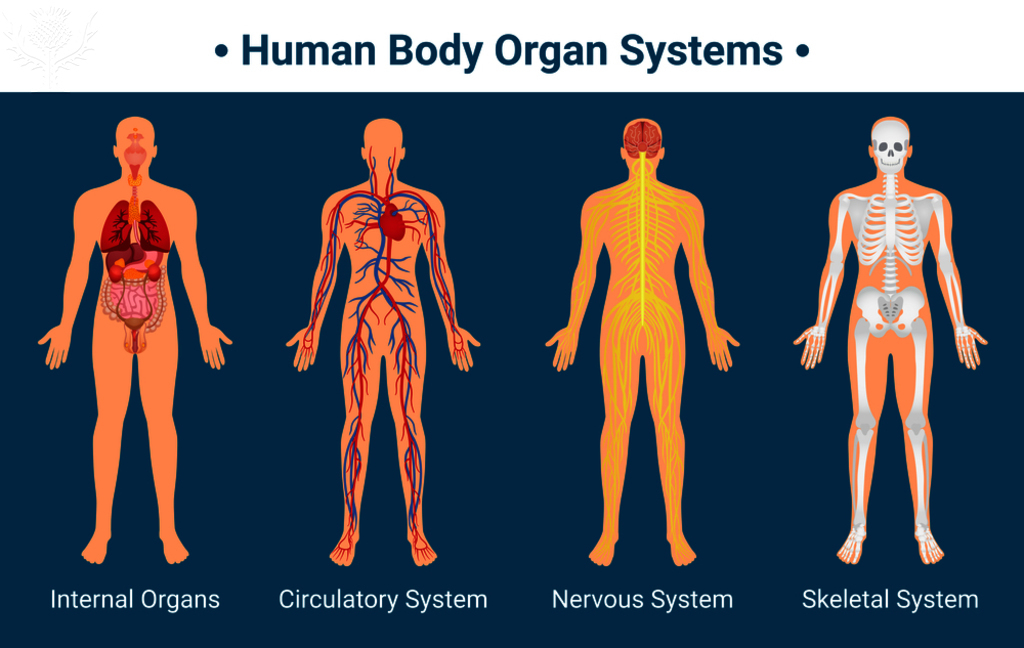
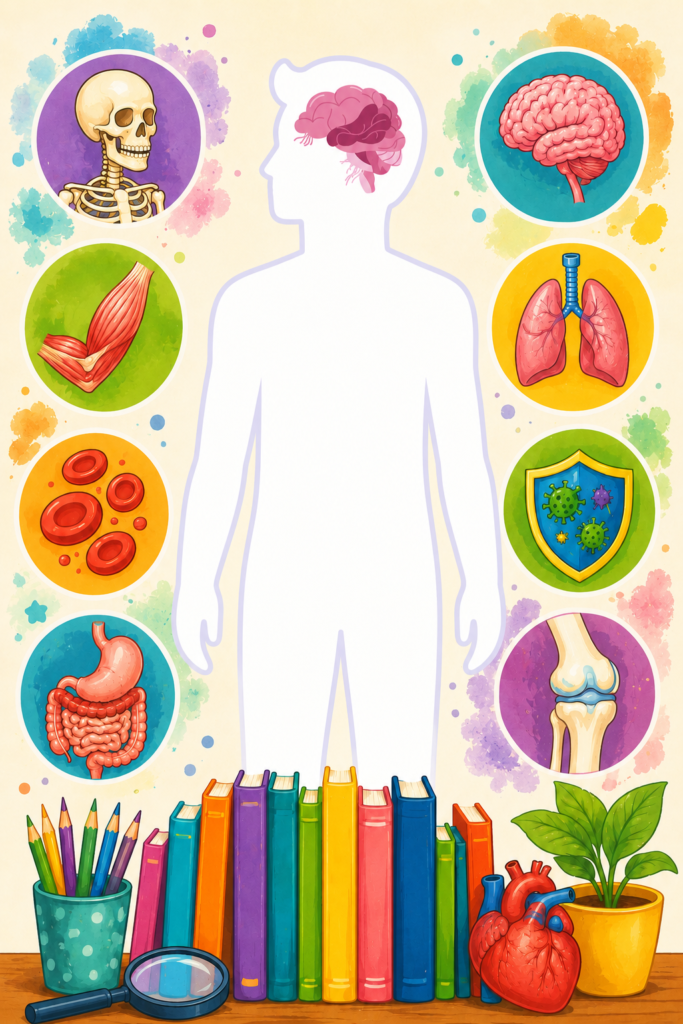
- how the body’s major systems work together to keep us alive
- how the brain, nerves, and senses help us think, move, and understand the world
- how the heart, lungs, and blood deliver oxygen and nutrients throughout the body
- how the digestive system turns food into energy and building materials
- how bones and muscles work together to support the body and make movement possible
- how the immune system helps protect us from illness
- how healthy habits like eating well, exercising, sleeping, and practicing good hygiene help our bodies stay healthy and strong
📚 Free Books
| Grades 3 – 5 | Grades 5 – 7 |
|---|---|
| Nonfiction | Nonfiction |
| The Human Body Encyclopedia Covers all the systems, common diseases, and staying healthy | Body Systems Enhanced ebook with overviews of body systems, including videos and worksheets |
| Inside the Brain All about the brain, with simple exercises for testing reflexes and balance, and other brain games Inside the Lungs Facts about lungs, with several activities, including making a model lung. Inside the Stomach All about digestion, with activities involving taste and smell, and building a model stomach | The following enhanced ebooks include videos and worksheets: Skeletal System Cardiovascular System Respiratory System Digestive System Nervous System Heredity |
| Eat Well Learn about nutrients and what the body needs to stay healthy. | Food Discusses the components of food, digestion, taste, food spoilage, how its grown, and more; Enhanced ebook with video and worksheets |
| Charles Drew Pioneered methods to store blood plasma, organizing large-scale blood banks Dr. Jonas Salk Developed the first safe and effective inactivated polio vaccine Alexander Fleming Discovered penicillin, the world’s first effective antibiotic | Searching for Cures Discoveries that have helped scientists fight disease |
| Human Body Eyewitness Workbooks Includes fast facts, activities, and quizzes | DK Pocket Genius Human Body Quick fact reference |
| Fiction | |
| Magic School Bus Inside the Human Body Travel through the body systems and see how they work |
📚 Additional Books
(As an Amazon Associate I earn from qualifying purchases.)
| Grades 3 – 5 | Grades 5 – 7 |
|---|---|
| Nonfiction | Nonfiction |
| Illumanatomy Reveals anatomical layers in detailed illustrations showing how body systems work together | Knowledge Encyclopedia Human Body! Detailed cross-sections of every body system — cells, digestion, nervous system, muscles, and medical milestones |
| Gut Garden: A journey into the wonderful world of your microbiome Bite sized facts about bacteria, viruses, and microbes with engaging illustrations | Science Comics: The Brain Graphic novel that dives deep into brain, memory, sensory perception, and consciousness |
| How Do You See the World? Covers eye anatomy, how light and the brain work together to create vision, and common eye conditions | Becoming Bionic and Other Ways Science Is Making Us Super How technology and science are enhancing human abilities, from prosthetics and regenerative medicine to jetpacks and more |
| DK Life Stories: Florence Nightingale Covers her data-driven approach to medicine and hospital reform | 100 Scientists Who Made History Mini-biographies of medical pioneers, biologists, doctors, and innovators |
| Human Body Learning Lab: Take an Inside Tour of How Your Anatomy Works Combines hands-on model-building projects with clear anatomical diagrams and interactive experiments | Carson Dellosa The 100+ Series: Human Body Workbook Good for practice activities as a supplement to lessons |
| Fiction | Fiction |
| The Magic School Bus The Search for the Missing Bones A deeper dive into skeletal anatomy | Survive! Inside the Human Body, Vol. 1: The Digestive System Miniaturized characters travel through a girl’s digestive system, illustrating accurate anatomy and physiology |
📚 Keep Browsing
Other places to find lists of fiction books by topic:
Reinforce what you’re studying while encouraging your kids to follow their interests. Check libraries for:
- Human body reference books with photographs, diagrams, labeled illustrations, and fascinating facts about how the body works.
- Nonfiction books about a specific body system, such as the skeletal, muscular, circulatory, respiratory, digestive, nervous, or immune system.
- Books about health and the human body that explain nutrition, exercise, sleep, germs, hygiene, growth, and healthy habits in kid-friendly ways.
- Biographies or spotlights on scientists and medical professionals such as physicians, nurses, physiologists, or medical researchers whose discoveries have improved our understanding of the human body.
- Activity workbooks with diagrams, coloring pages, simple experiments, models, or hands-on projects that help kids explore how the body works.
🧠 Connect What You Read
Choose one or two simple activities to help your kids make connections between what they read and their own bodies.
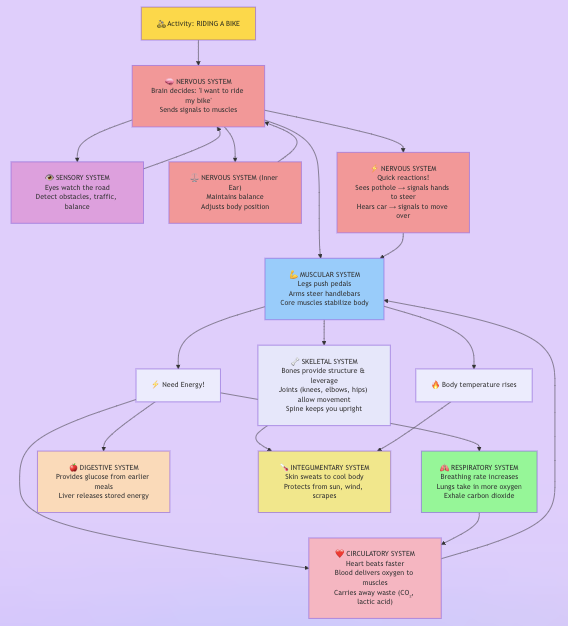
🧠 A Day in the Life of Your Body: Pick one routine activity, such as eating breakfast, riding a bike, reading a book, or throwing a ball. Make a list or draw a flow chart showing all the body systems involved. Think beyond the obvious. What is your brain doing? Your muscles? Your lungs? Your digestive system? Which systems have to work together for you to complete the activity?
Riding a Bike – Body Systems Checklist:
- Brain (Nervous System) → Decides to ride, sends signals, keeps balance
- Eyes → Watch the road, see obstacles
- Muscles → Legs pedal, arms steer, core keeps you steady
- Bones (Skeletal System) → Give structure, joints bend
- Heart & Blood (Circulatory) → Pumps faster, delivers oxygen
- Lungs (Respiratory) → Breathe faster, get more oxygen
- Digestive System → Gave you energy from breakfast
- Skin → Sweats to cool you down
- Human Body Labeling Activities
- Make a Model Lung
- Make a Heart Valve
- Study Bone Fractures
- Are You Left or Right Brained?
- More Human Body Science Activities
🧠 Keep Exploring
Core Knowledge has free human body units with readers, workbooks, and teaching guides.