Ahhh, the great outdoors. Nature-based learning activities can easily take you in a hundred different directions: write about it, sketch it, track it, map it, turn it into a full-blown project — or just follow the curiosity and see where it leads, (perhaps the best strategy of all).
You can meet kids where they’re at — constantly moving and endlessly distracted by the things around them — with activities that make good use of all that energy.
The following free backyard learning resources suggest simple ways to take learning outside—whether you have ten minutes, an afternoon, a season or all year.
Start Here: Easy Ways to Take Learning Outside
Step outside and start small. Quick and easy activities to do in the backyard or a local park:
 Measure & Order
• Pick a few natural objects (sticks, leaves, rocks, flowers) and measure them using a ruler, or just compare by eye.
• Put them in order from smallest to largest (or shortest to tallest).
👉 Builds measurement skills, comparison, and early math thinking.
 Sit Spot
• Pick one place; sit quietly.
• Notice what’s around you; watch what moves or changes; count how many different sounds you hear.
👉 This becomes the foundation for journaling later.
 Color Hunt
• Find as many shades of one color as possible (green is great).
• Or: find one item for every color of the rainbow.
👉 Easy win for younger kids; still engaging for older ones.
 One Object; Many Questions
• Pick one thing (leaf, bug, rock) and ask:
• What is it?
• What does it do?
• What’s changing about it?
👉 Sneaks in critical thinking.
 Follow Something
• Follow an ant trail.
• Watch a bird for as long as you can.
• Track where water flows.
👉 Builds focus and curiosity.
 Nature Collect & Sort
• Collect a few small items (leaves, rocks, sticks).
• Sort by size, shape, color, or type.
• Use the objects to make 2D shapes and patterns.
👉 Early classification skills (science + math crossover).
Scavenger Hunts (From Simple to Analytical)
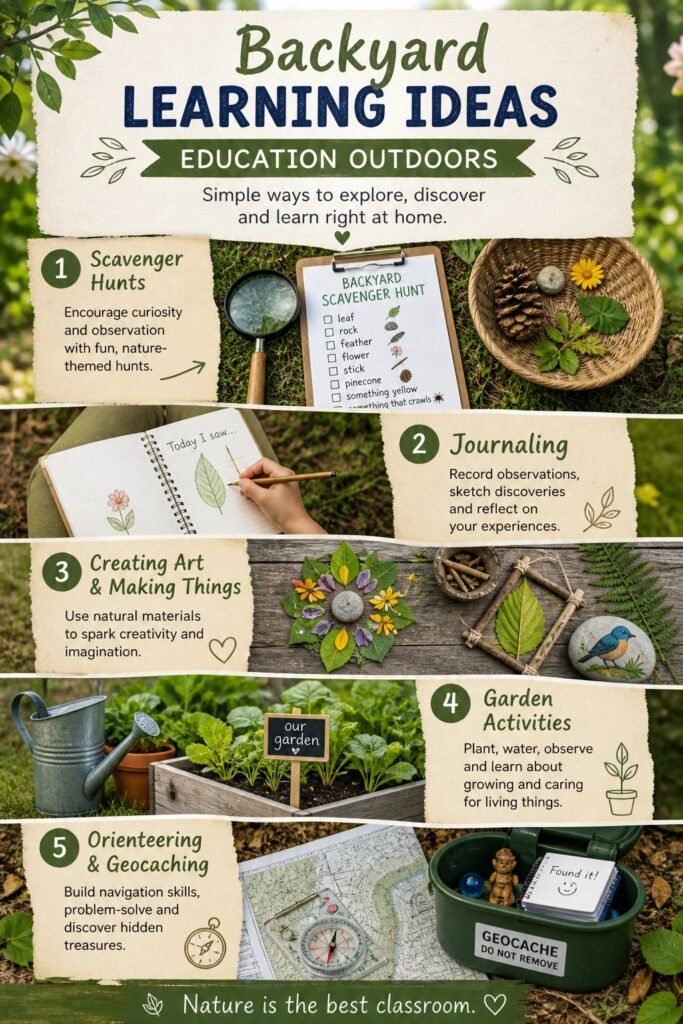
If the “start small” ideas help take learning outside, scavenger hunts can keep you there a little longer, and add a little more structure. But they’re still an easy way to get started outside with no big setup or elaborate plan. Just hand kiddos a list (or make one up on the spot). It can be as simple as: find something green; find something moving; find something that makes a sound.
Or, the activities can be expanded from finding to figuring out: Find 3 different kinds of leaves → How are they different?; Find 2 insects → What are they doing? → What do you think their jobs are here?; Find something living and something non-living → How can you tell?
Ready-To-Go Scavenger Hunts
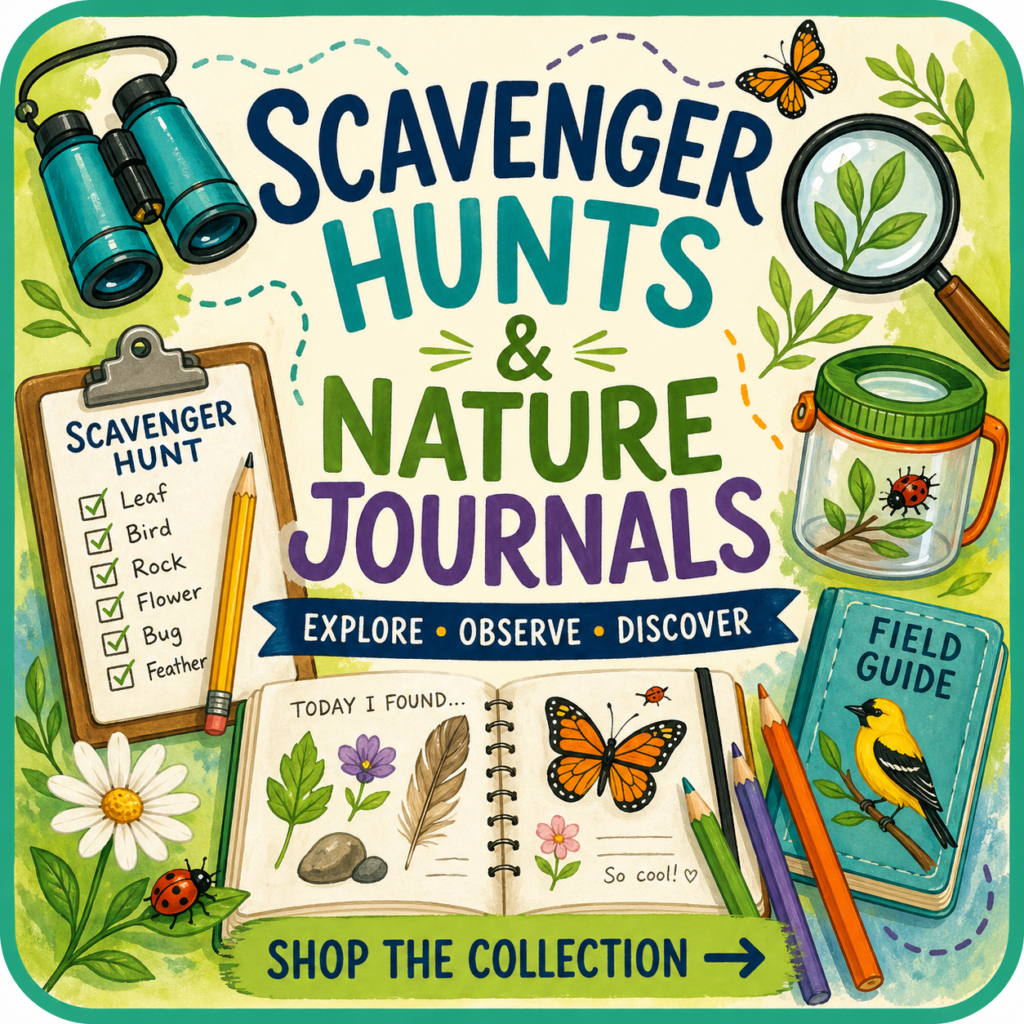
Here are some free grab-and-go printables, including simple picture-based hunts for younger kids, and more detailed observation-based challenges. Pick one that fits your day and head outside.
More Challenging
• Texture Explorer
• Adventure Hunt
•Change Detective
• 5 Outdoor Learning Challenges
• 50 Things to Find
A cool find during a scavenger hunt can naturally lead to other types of learning, like nature journaling.
Nature Journaling: Notice → Record → Reflect
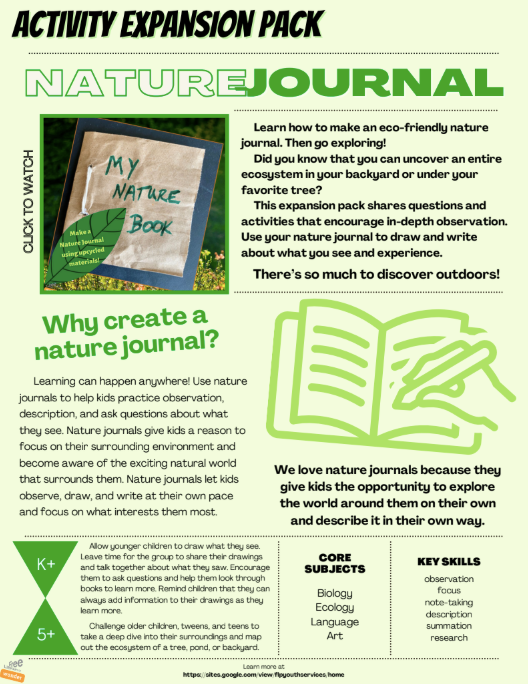
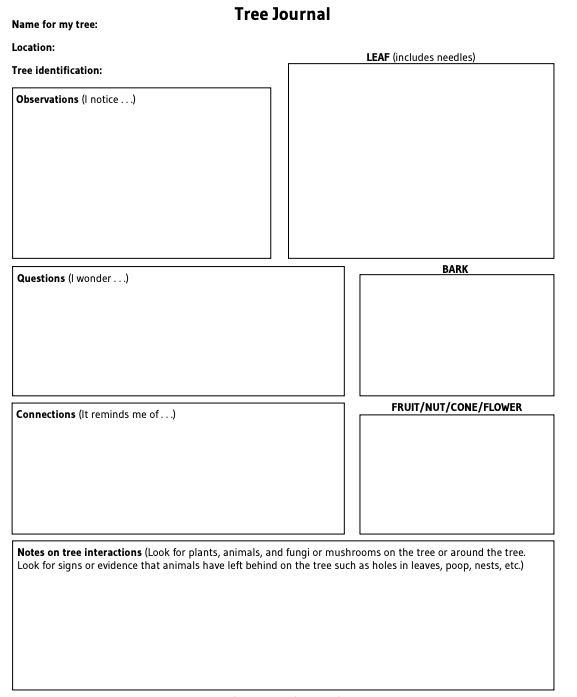
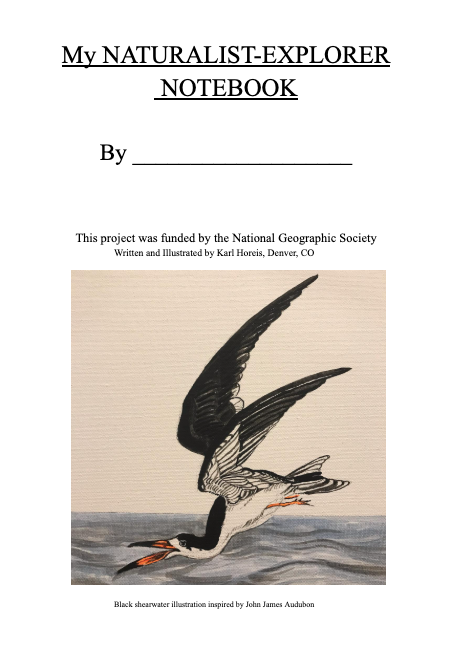
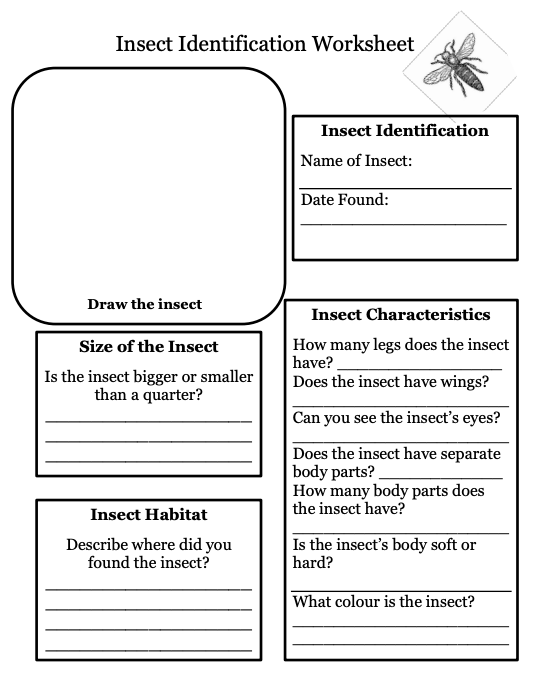
When kids are out exploring or participating in a scavenger hunt, they hopefully encounter something that piques their interest. It might be a leaf with an unusual shape, an insect exhibiting interesting behavior, or a recurring pattern in the environment. Nature journaling provides a simple, effective way to capture these moments of discovery through quick sketches, brief written observations, or labeled drawings.
Free Quick-Start Journaling Resources For Kids
Nature Journaling Activities
(#CommissionsEarned)
Lessons to help develop
observation skills &
sketching techniques.
Seasonal Observations: Visit the same outdoor spot weekly, sketching plants, animals and weather. Write dated entries describing what changed, and form hypotheses about why.
Outdoor Measurement & Data Log: Measure, count and classify natural objects: leaf lengths, petal counts, tree circumferences. Record data in journal tables and create simple graphs from the findings.
Five Senses Narrative Writing: Sit quietly outdoors and write a detailed narrative using all five senses. Draft, then revise focusing on vivid word choice to make descriptive paragraphs.
Research Journal: Choose one small creature or plant. Sketch it and write an informational entry, including habitat, diet, and role in the ecosystem.
Make It With Nature
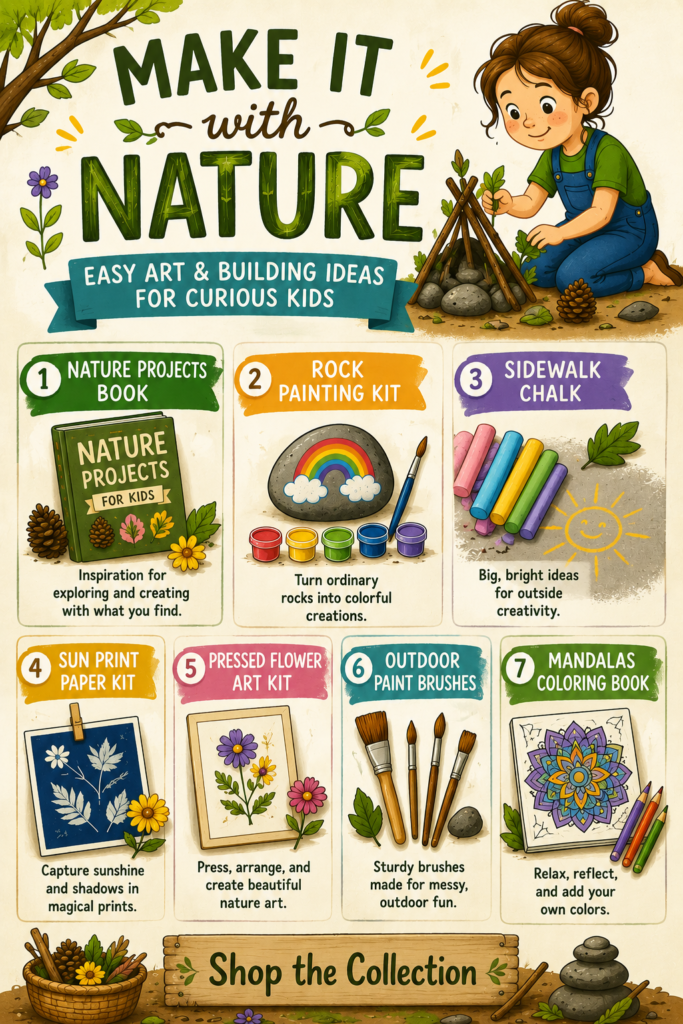
Documenting discovery doesn’t always have to be with pencil and paper. Sometimes kids want to do something with what they find, like build with it, arrange it, or turn it into something new. This is where outdoor art and creating with natural materials comes in. Here are some simple, low-prep ways to let kids create, build, and experiment using whatever they find outside.
Earned)
Sidewalk “Painting”: Use colorful chalk to “paint” the sidewalk, bricks and rocks. Check out Best Sidewalk Chalk Activities for Learning.
Texture Rubbings: Make rubbings of various outdoor surfaces, like bark, leaves, pine needles, rocks. Turn them into decorative wall art. Try this leaf rubbing activity.
Mud Masterpieces: Make “earth paint” by experimenting with varying amounts of water, sand and clay to create different consistencies. Then make soil art and mud paintings.
Nature Paint Brushes: Test different natural materials (pine needles, feathers, sticks, bundled grass) as painting tools. Try this activity.
Nature Mandalas: Arrange natural objects (stones, petals, leaves, acorns) outward from a center point to create symmetrical mandalas on the ground. Then photograph and sketch them. Try this plant mandala activity. And this nature mandala activity.
Tree Faces: Choose a tree. Observe its unique features (bark texture, shape, age). Use natural materials and clay to add a face. Write a first-person journal entry or short narrative from the tree’s perspective. Try this activity.
Learning in the Garden
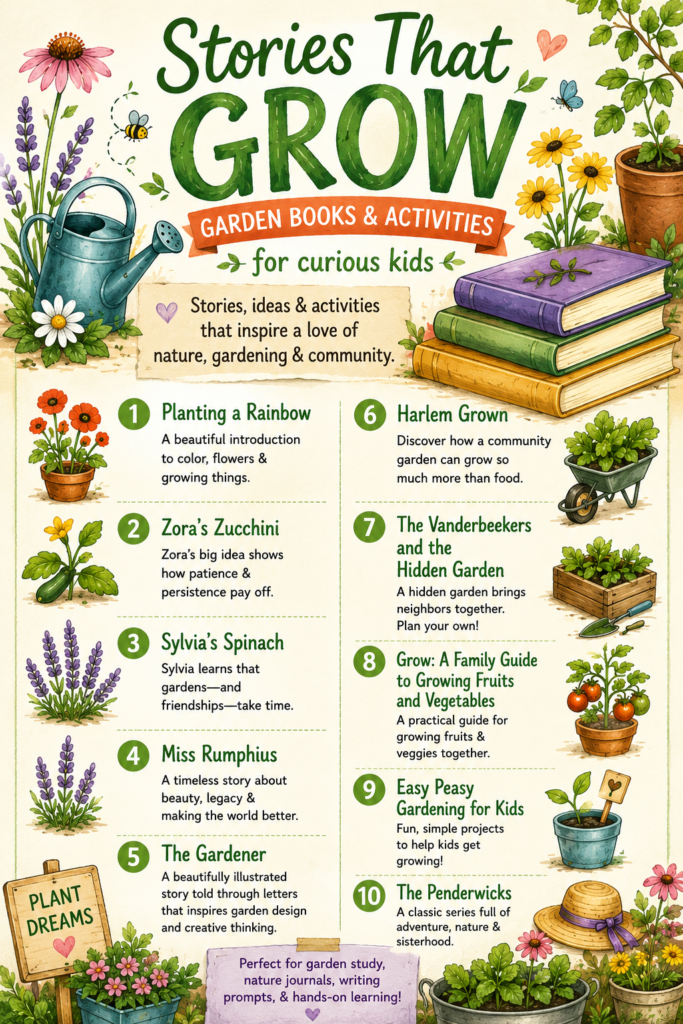
There are many ways to learn in the garden. Sometimes it can be planting something and seeing results over time. Or noticing what’s in the environment: which plants thrive in the sun, which insects keep showing up, or why one area grows differently from another.
A single gardening project can branch into:
- science through observation and experimentation
- math through measuring growth and comparing patterns
- writing through garden journals and labeling
- art through sketching plants, making nature dyes, or creating garden-inspired projects
- geography and history through learning where foods and plants come from
- even life skills like patience, responsibility, and problem-solving
Below are some free resources and activities that make it easy to explore gardening as both a hands-on project and a jumping-off point for all kinds of learning. (Check out this Learning Pathways Map, a visual representation of all the connected subjects and topics that can be learned in a garden).
Kids Gardening has many free learning tools, including lesson plans, activities, book lists and guides. It’s all conveniently searchable by content type, topic, grade, season, and whether it’s an indoor or outdoor activity. A good place to start is Garden Basics. Or explore activities by topic, such as: shapes and patterns in nature (math); decomposition walk (science); garden discovery journal and writing prompts; a Memorial Day lesson, and how the potato changed the world (history).
Ready Set Grow! provides a free curriculum for grades K – 8. Lessons are built around edible plant parts. There are curriculum guides and journals, with everything easily accessible via Google Drive.
Orienteering & Geocaching
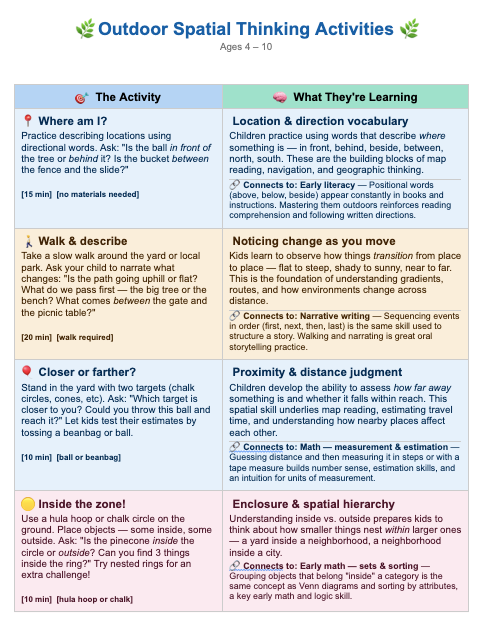
Use outdoor areas to help kids build navigation and spatial-awareness skills through easy, hands-on activities like learning directions, mapping familiar spaces, noticing landmarks, and understanding how places connect together.
These activities introduce:
- map skills
- spatial reasoning
- observation and memory
- direction and navigation
- problem-solving through movement and exploration
Below are some free orienteering activities including simple compass games, backyard mapping exercises, and beginner-friendly navigation challenges.
Simple Compass Capers: Point out north, south, east, and west. Talk about where the sun rises and sets. Do a scavenger hunt to find items in each direction. Use a real compass for extra fun and learning! Call out directions to run, hop, take 10 steps, etc. in each direction; determine which direction the wind is blowing.
Map My Yard (house or neighborhood): Step-by-step instructions.
Geocaching Adventures
If orienteering teaches kids how to navigate, geocaching gives them a reason to use those skills.
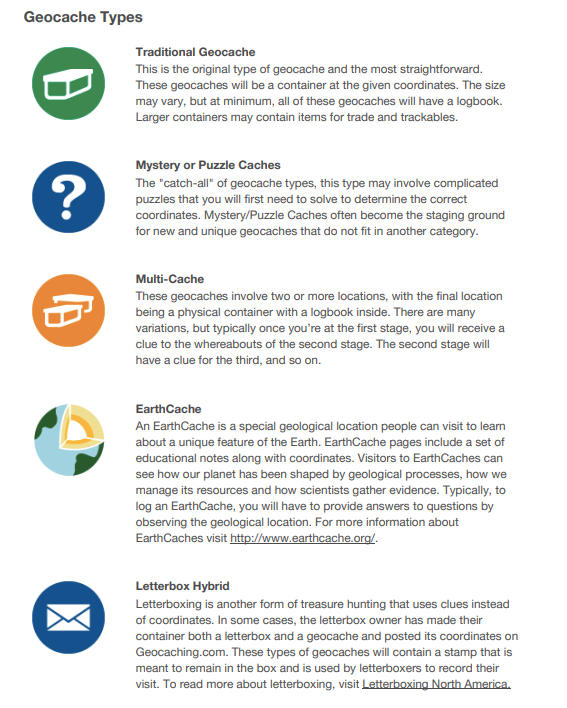
Geocaching is basically a real-world treasure hunt using GPS coordinates. Kids learn how to follow directions, read maps, and use location tools—but the learning rarely stops there.
Because many geocaches are hidden in parks, nature areas, trails, and historical sites, geocaching naturally opens the door to all kinds of cross-subject learning.
A single geocaching trip can lead to:
- earth science through observing rocks, landforms, waterways, and natural landmarks
- history through monuments, historical markers, battlefields, and preserved sites
- geography through maps, coordinates, elevation, and land features
- environmental awareness through exploring local ecosystems and conservation areas
- problem-solving and teamwork through navigation and finding clues
You can bring along a simple geocaching worksheet or journals to help kids document their findings and reflect on what they learned about the environment or history of the area.
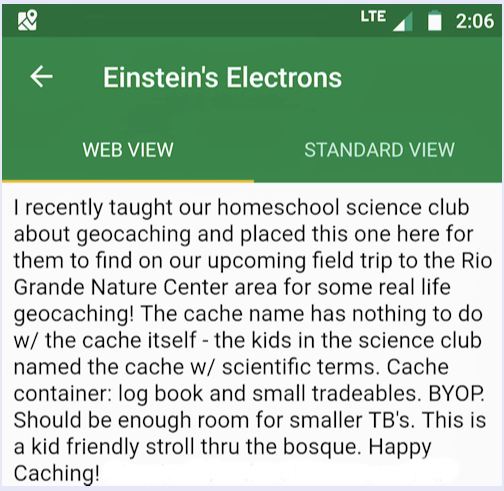
Check out the official Geocaching app, to look for caches with the “Recommended for Kids” attribute to ensure they are accessible and safe.
“The geocache flies at midnight.”
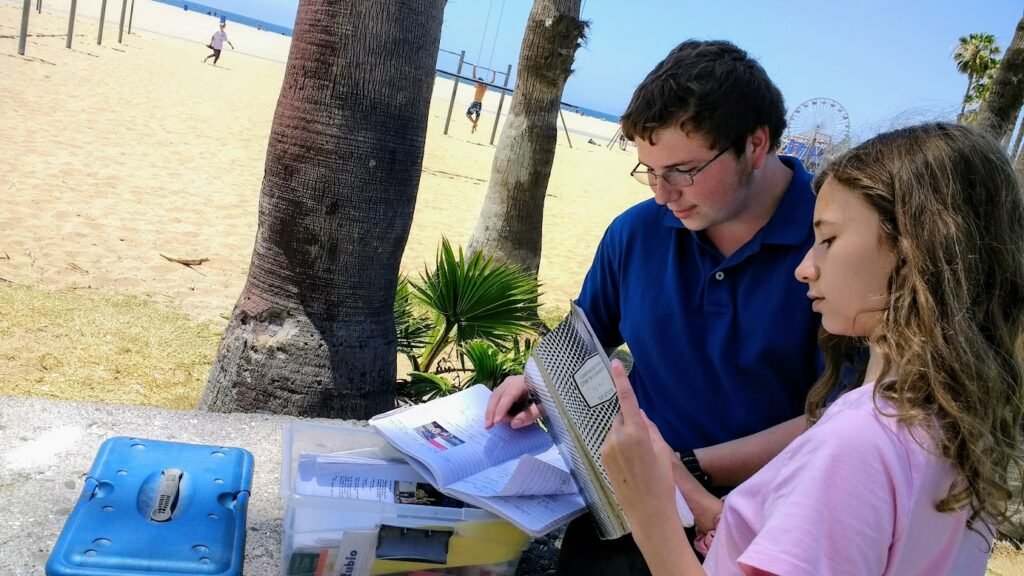
One of my kids’ favorite geocaches sent us to a bike rental shop on the Venice Beach boardwalk. We had to crack a code that revealed a secret phrase we were supposed to say to the guy behind the counter in order for him to release the geocache. The phrase was: “The geocache flies at midnight.”
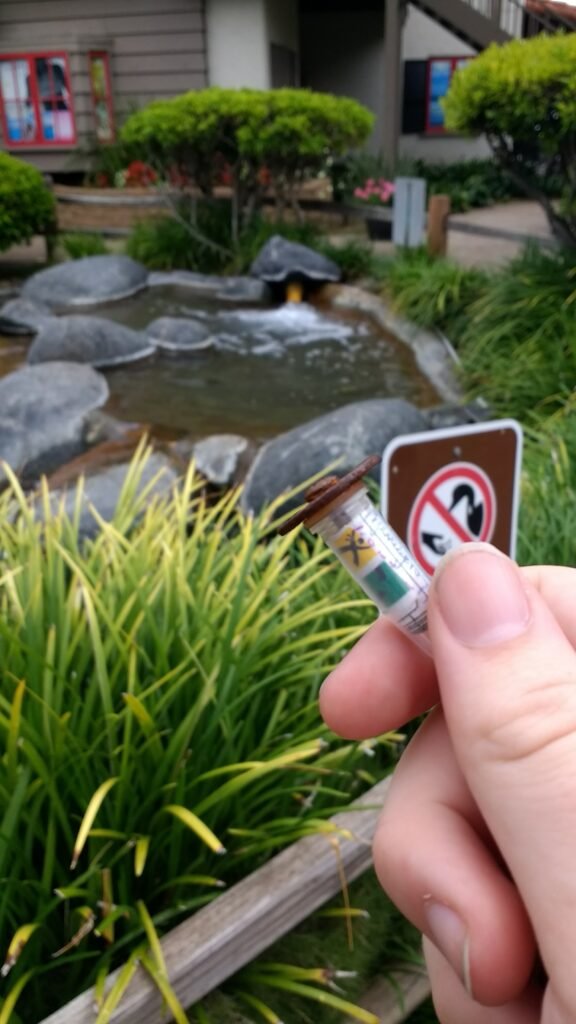
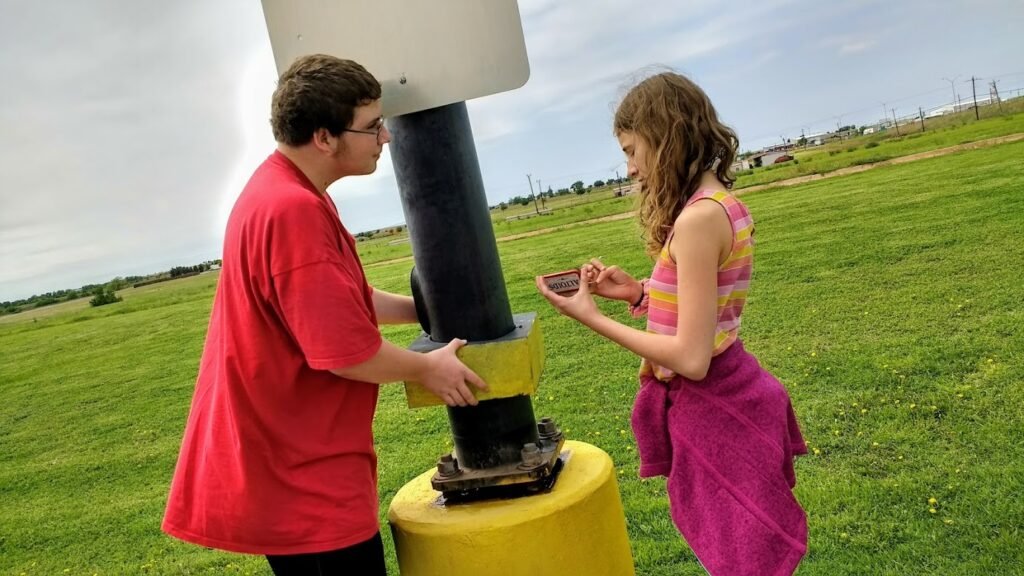
They’ve also loved finding tiny microcaches hidden under light posts or disguised as bolts beneath park benches.
The trackable tags are especially interesting. We once found one with the goal to travel across the U.S. Another had originally been logged in Europe before eventually making its way to where we found it. (My son is planning to take a trackable with him on an upcoming trip to Alaska to see if it can eventually make its way back home).
My son has expanded his geocaching hobby into maintaining his own geocache filled with the usual trinkets kids love to discover, and most of the visitors who sign the log are other families exploring together.
More Backyard Learning Posts:
☀️ Sun Science